For artistic guitar playing, tone color of a good quality is essential. It’s one of the main reasons why the audiences come to our concert. Much has already been written about the tone, but I would like to approach the matter from a different perspective. I have not yet encountered any article that utilizes the imprint of the string for better understanding. Take your guitar, place your right hand in the basic position, and press your fingers firmly on the strings. An imprint will appear on the fingertip.
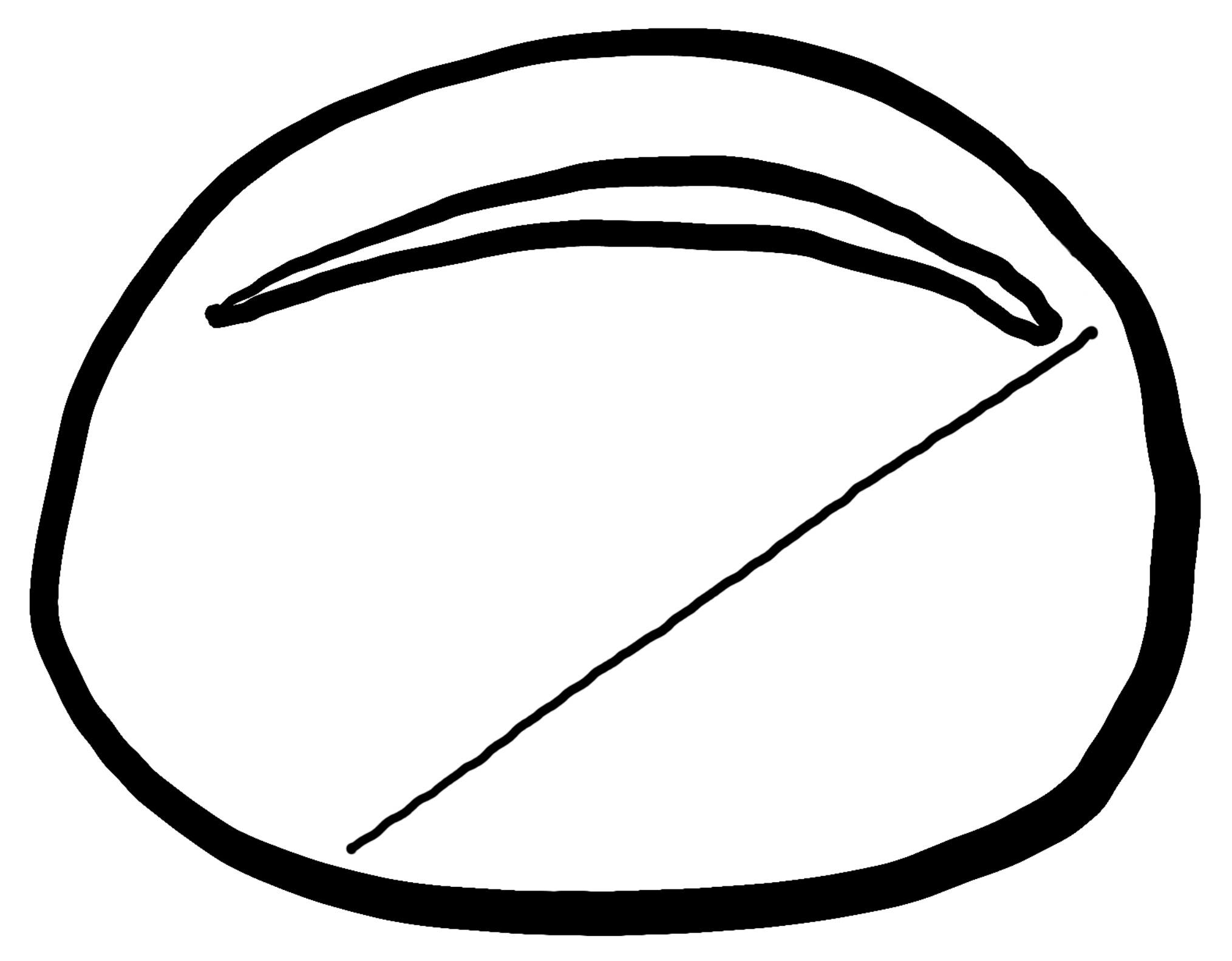
For a quality tone, the characteristic imprint is at an angle of about 45 degrees towards the nail:
Conversely, it is necessary to avoid an imprint almost parallel to the nail:
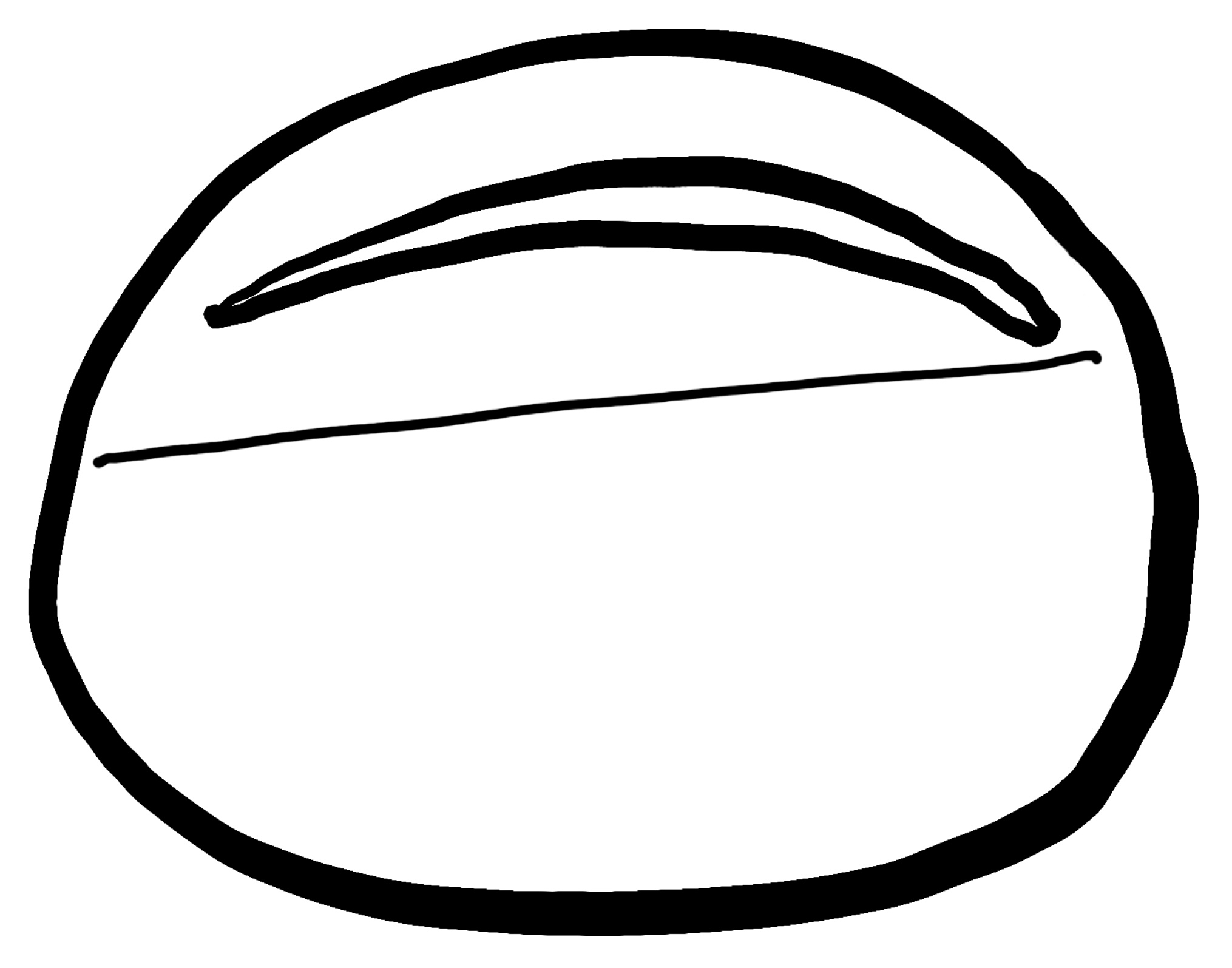
We can change the angle by experimenting with the position of the hand, but mainly by changing the hold of the instrument and the height of the head of the guitar: is it at eye level, above, or below?
The key is to achieve the longest possible contact with the fingertip for a beautiful tone. When using nails, with an appropriate nail shape, the following happens: as the string leaves the finger, it is touching both the fingertip and the nail.
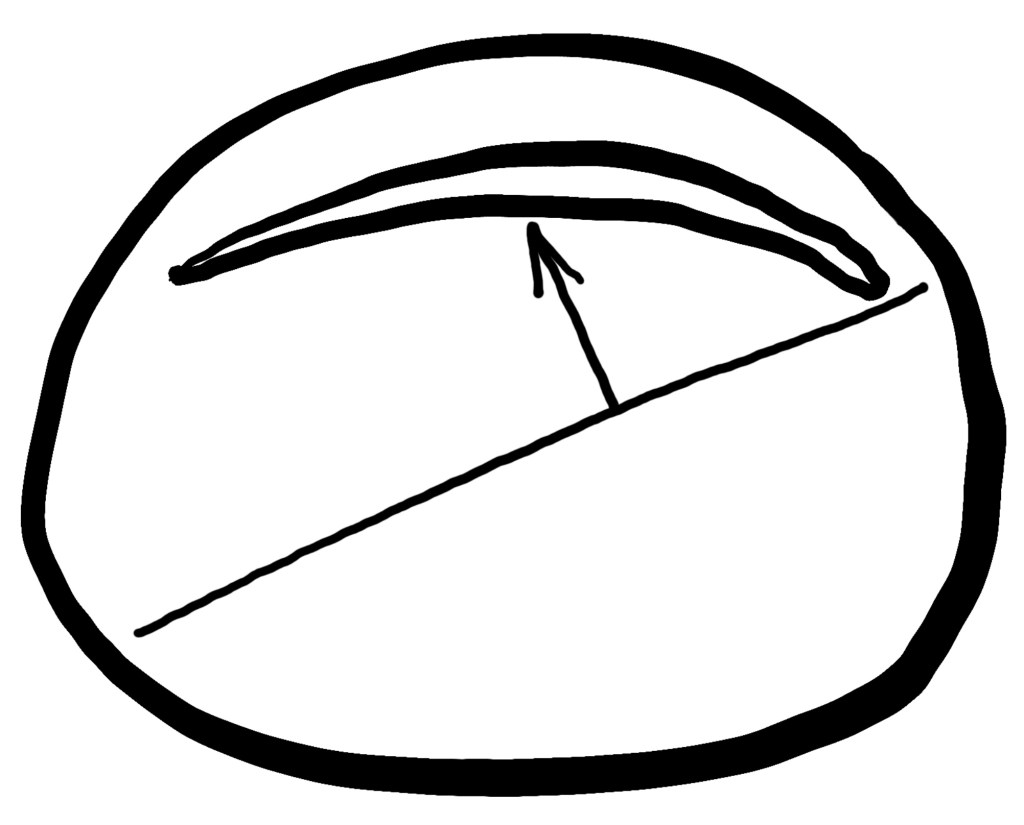
If the string is parallel to the nail, when it resonates, it only touches the nail. This results in an unpleasant, nail-like tone.
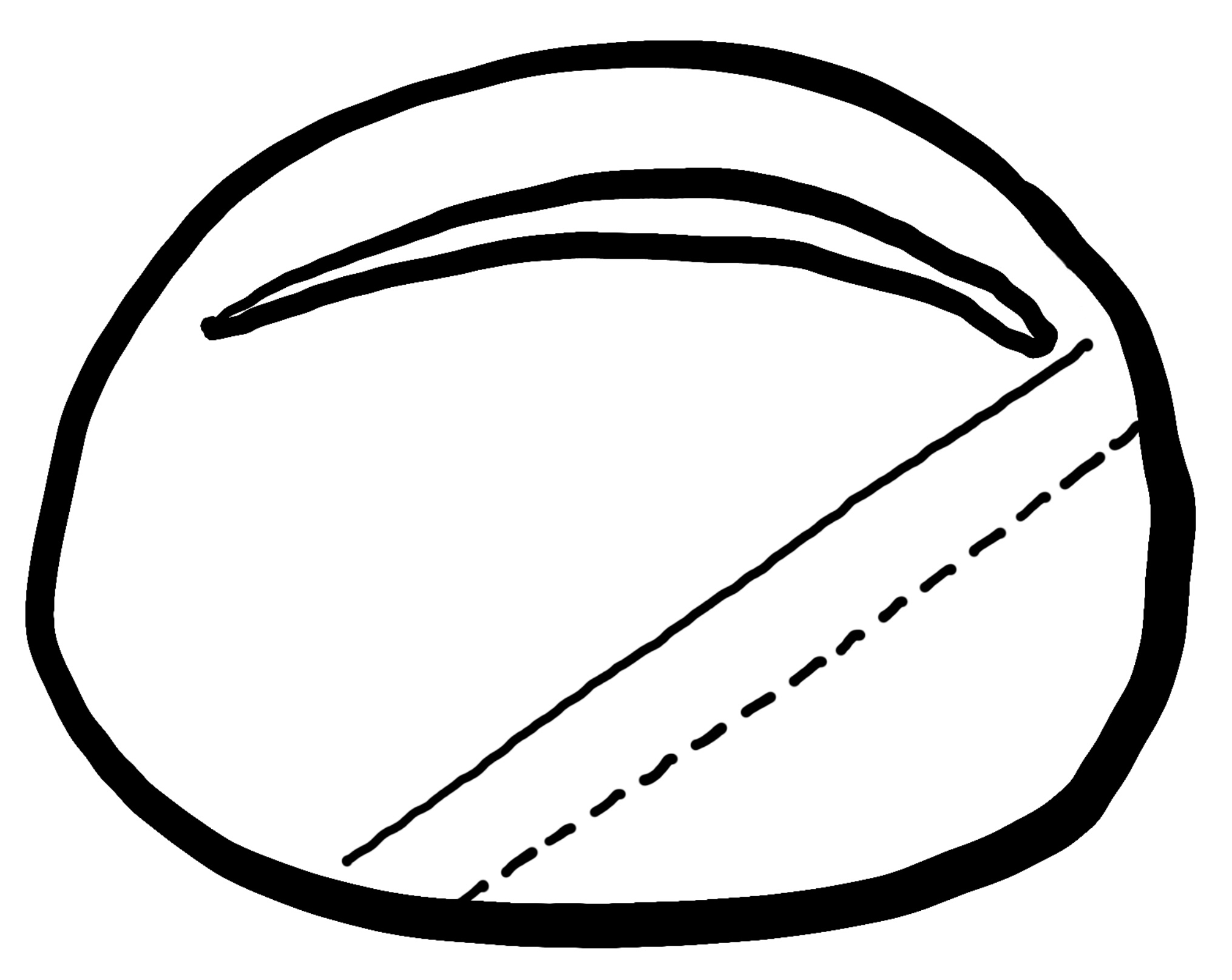
Another factor is how much we press the string down towards the soundhole. During tremolo and similar techniques, the contact between the finger and the string is shortened: there’s no time, so the touch needs to be minimized for each tremolo note to resonate. A different scenario takes place when playing adagio, at slow tempos, as we have time to work with the tone. Therefore, we can „squeeze“ the string and achieve a better tone. The dashed line shows what happens precisely with such a technique: the string touches the finger lower, increasing the contact area. The result is a firmer, smoother tone.
For better understanding, I propose the following exercise: press down finger i (on the g string) so deeply that the string touches the fret. The contact of the string and the fret in this excercise makes a muted, soft metallic sound. Make sure that no other movement than the finger itself is performed. The hand remains in its basic position and should not move downward at all. For assurance, you can place your left hand on the joints of your right hand. It must not bounce.
If everything is fine, extend the exercise to both fingers i and m, alternating them. Once you understand the movement, reduce the range of motion so that the string no longer touches the frets, but is close to it.
Another similar exercise that has proven very effective for me is as follows: place a CD cover under the strings. Play an arpeggio so that each finger touches it upon striking. This way, we can verify how deeply the fingers reach upon striking. Fingers m and a tend to strike deeper. Finger i often has a shallower touch, resulting in a poorer tone.
Once we find our ideal tone, we remember where the string should touch the finger. When playing passages where we are not satisfied with the tone, we will know what the finger should aim for to achieve a quality tone.
The question remains whether to play with nails or without nails. Most players did not use nails until the classical period. Fernando Sor writes in his Method that „Never in my life have I heard a guitarist who uses nails, whose playing would be supportable.“ However, his friend Aguado played with nails, almost as the only one in Paris at the time.
André Segovia used nails, and his tone remains legendary. To clarify the issue, it is necessary to emphasize that a quality tone when playing with nails can only be achieved if the fingers touch both the fingertip and the nail as the string leaves the finger.
The nail is an obstacle that the finger overcomes. This causes the string to vibrate more, resulting in a stronger tone and better projection.
When playing with nails, it is important to have the correct nail shape and to file and smooth the nails. Long nails, especially on the m finger, which is the longest, can cause hand bouncing, hindering fast technique.
Conversely, playing without nails tends to have weak dynamics. If we want to play forte, a string that leaves the finger too easily tends to be pulled under. This results in the string hitting back the fret, one of the worst mistakes when creating tone.
In conclusion, I would like to mention Dionisio Aguado, who defended his nail-playing technique by saying, that it enabled him to perform fast passages. Nails are indeed as a support and have a significant influence on the speed of playing, whether of scales or fast arpeggios. Finding the right balance of their length, the angle of tirando and apoyando strokes, and half-apoyando remains an individual task for each guitarist. Each hand has its peculiarities.
However, analyzing the tone by the imprint of the string seems to be universal and objective.
 Josef Mazan
Napsat komentář